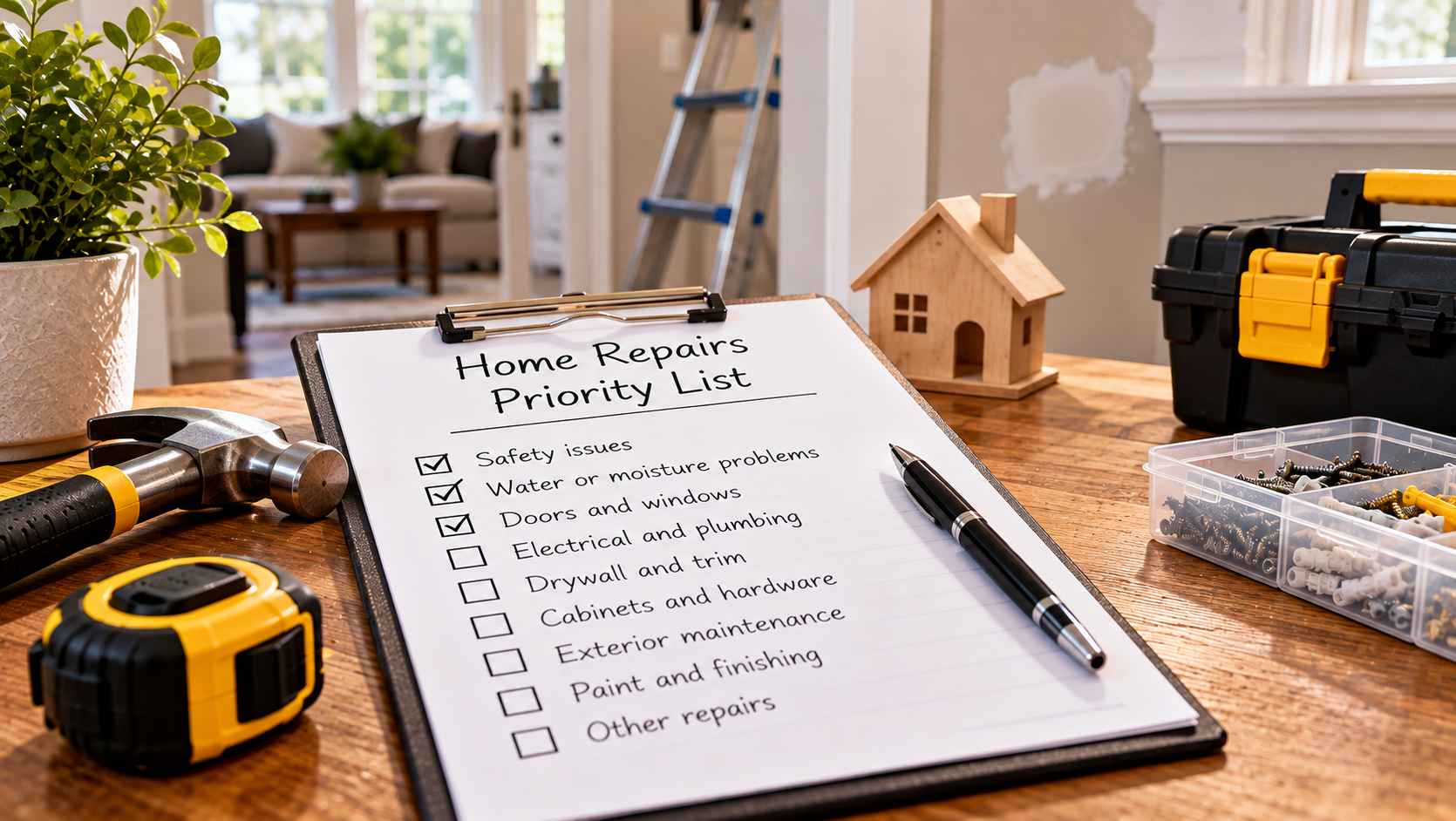

A home repair list can grow surprisingly quickly. One week, a cabinet hinge is loose. The next, a door starts sticking, a section of trim needs attention, and a small patch of drywall is waiting to be repaired. None of these jobs may seem urgent on its own, but together they can make it difficult to know where to start.
The answer is not always to fix the oldest item first.
A better approach is to look at each repair based on safety, potential consequences, frequency of use, seasonal timing, and how easily several jobs can be handled together. This allows homeowners to focus their time and budget where they are most useful without treating every minor imperfection as an emergency.
Start With Safety and Function
The first question should be whether the problem creates a safety concern or prevents something in the home from working properly.
A loose handrail, damaged step, unstable fixture, or door that does not operate correctly may deserve attention before a cosmetic issue such as a scuffed baseboard.
The same principle applies to household features that people use constantly.
A sticking exterior door, damaged lock, or window that does not close properly may have a greater practical priority than a small mark on an interior wall.
This does not mean every malfunction requires immediate professional intervention. It means that repairs affecting safe movement, access, security, or normal use should generally be considered before purely decorative improvements.
Look for Moisture and Water-Related Problems
Water deserves particular attention because a small visible sign can sometimes point to a problem that needs further investigation.
A stain on a ceiling, damp-looking area, deteriorating caulking, or unexplained swelling around a wall or floor should not automatically be treated as a cosmetic defect.
The right response depends on the cause.
A homeowner may be dealing with an isolated finishing problem, but there could also be a plumbing leak, exterior water entry, condensation, or another source that needs to be addressed.
Painting over a stain without understanding why it appeared may only hide the symptom temporarily.
When moisture is suspected, identifying and addressing the source should generally take priority over improving the appearance of the affected area.
Consider Whether One Problem Could Affect Another Area
Some repairs deserve attention because they can influence other parts of the home.
For example, deteriorating caulking around a location exposed to moisture may be more important than a small scratch on a door. Similarly, a damaged section of exterior trim may deserve attention before purely interior cosmetic work if it is allowing water or weather exposure to affect the surrounding materials.
The goal is not to assume that every small defect will become a major problem.
Instead, ask whether leaving the issue unresolved could reasonably create additional maintenance work.
This question can help homeowners distinguish between something that is simply unfinished and something that may be better addressed sooner.
Separate Functional Repairs From Cosmetic Work
Once safety, moisture, and potential damage have been considered, divide the remaining list into functional and cosmetic repairs.
Functional repairs affect how the home operates.
They might include adjusting doors, repairing cabinet hardware, fixing damaged shelving, addressing loose trim, or restoring a feature that is no longer being used properly.
Cosmetic work is generally about appearance.
That could include touching up paint, repairing minor wall imperfections, replacing decorative trim, or refreshing finishes that have become worn.
Both categories matter. A well-maintained home should be functional and comfortable as well as visually appealing.
The advantage of separating them is simply that homeowners can decide which type of work deserves attention first.
Pay Attention to Frequently Used Areas
A repair in a heavily used part of the home can have a greater impact on everyday life than an identical issue in an area that receives little traffic.
A sticking kitchen cabinet may be opened dozens of times each week. A loose bedroom door handle may be used repeatedly. A damaged section of hallway trim may be exposed to constant traffic.
By comparison, a cosmetic imperfection in a rarely used storage room may have little practical impact.
When deciding between several similar repairs, consider how often the area is used and how much the issue interferes with normal routines.
This can make the maintenance list feel much more manageable.
Take Seasonal Timing Into Account
Some repairs are easier or more useful to complete during particular times of the year.
Exterior painting, outdoor carpentry, caulking, and certain other projects may depend on suitable weather conditions.
Ottawa homeowners also have to account for seasonal changes that can affect exterior materials, doors, windows, and other parts of the home.
A seasonal task that has a limited window may therefore deserve priority over an interior cosmetic project that can be completed at almost any time.
The exact timing depends on the repair and the materials involved, so homeowners should consider the requirements of each job rather than applying one schedule to everything.
Group Several Small Jobs Together
A growing maintenance list often contains several unrelated tasks that are individually small but collectively time-consuming.
One room may need a small drywall repair. Another may have a loose door handle. A hallway might need trim work, while several cabinets need minor adjustments.
Trying to address each item independently can make the list feel endless.
Instead, group repairs by location, type of work, or the tools and materials they require.
For example, several finishing repairs might be planned together, while hardware adjustments can be handled during the same maintenance session.
When a household has several unrelated repair jobs waiting at the same time, working with a local service such as Gillespie Handyman in Ottawa can be one practical way to organize and address tasks that require different tools, materials, or experience.
The important consideration is the homeowner’s actual needs rather than trying to turn every small repair into a major project.
Think About What You Can Realistically Handle
Homeowners often underestimate how much time a repair can require.
A job may appear simple until preparation, material selection, access, cleanup, or unexpected complications are considered.
Before deciding to handle a repair yourself, think honestly about whether you have the appropriate tools, skills, time, and confidence.
Basic maintenance may be reasonable for someone who is comfortable doing it. Other work should be left to appropriately qualified professionals.
Electrical systems, gas-related work, structural modifications, complex plumbing, and other specialized tasks can involve safety risks or technical requirements that go beyond ordinary household maintenance.
Knowing when not to DIY is part of good repair planning.
Look for Recurring Problems
A repair that keeps returning deserves a different level of attention from a one-time cosmetic defect.
If a door repeatedly becomes misaligned, a section of trim keeps separating, or the same area develops damage again and again, simply repeating the same repair may not address the underlying cause.
Keep a record of recurring issues.
Note when the problem appears, what has already been done, and whether anything else in the area has changed.
This information can help determine whether the issue is routine wear or whether it needs a closer assessment.
The goal is not to assume that a recurring problem is serious. It is to avoid spending time repeatedly fixing the same symptom without understanding why it keeps happening.
Do Not Forget Preventive Maintenance
A repair list should include more than things that have already broken.
Preventive maintenance can also help homeowners stay ahead of routine wear.
Check areas such as doors, windows, visible caulking, trim, hardware, storage fixtures, and exterior finishes periodically.
Seasonal walkthroughs can be particularly useful.
Instead of waiting until something becomes obviously damaged, homeowners can notice changes while they are still relatively minor and decide whether they need attention.
Preventive maintenance is not about eliminating every possible problem. It is about making reasonable checks part of normal homeownership.
Keep Cosmetic Projects on the List
Lower priority does not mean unimportant.
Cosmetic repairs contribute to how a home looks and feels, and completing them can make a noticeable difference.
The key is to schedule them realistically.
If several rooms need paint touch-ups, damaged trim needs attention, or small wall imperfections have accumulated, create a separate cosmetic list.
This list can then be worked through when higher-priority maintenance has been addressed.
Grouping cosmetic projects together can also make sense when several areas require similar materials or preparation.
Use a Simple Priority System
If the repair list still feels overwhelming, give every item a simple priority.
For example:
High priority: safety concerns, active water problems, significant functional issues, or repairs that could reasonably affect other areas.
Medium priority: problems that interfere with everyday use but are not urgent.
Low priority: cosmetic improvements and minor finishing work that can be scheduled around time and budget.
The categories do not need to be complicated.
The purpose is simply to prevent homeowners from spending an entire weekend fixing a low-priority cosmetic issue while more important maintenance remains unresolved.
Review the List Regularly
A repair list should change as the home changes.
Once a few items are completed, review what remains. Some issues may no longer matter, while others may have become more important.
It is also useful to add new repairs as soon as they are noticed rather than relying on memory.
A simple note on a phone, spreadsheet, or household planner can be enough.
The system does not need to be perfect. It only needs to make maintenance visible and manageable.
Make Repairs Easier to Manage
Prioritizing home repairs is less about deciding what is “important” in the abstract and more about understanding what matters most for the particular home.
Start with safety and function. Look carefully at moisture-related concerns. Consider whether one problem could affect another area. Give attention to frequently used spaces and seasonal work, then organize cosmetic repairs around the higher-priority tasks.
When several small jobs accumulate, grouping them can make the workload easier to understand and schedule.
Most importantly, be realistic about what can safely be handled without specialized skills.
A home will always have something that needs attention. The goal is not to eliminate every repair from the list. It is to create a practical system that helps homeowners decide what should be handled first, what can wait, and when getting appropriate help makes sense.